Chemo efficacy. Without the toxicity. Regardless of genetics.

New Path Molecular is developing drug conjugates to treat solid tumours, addressing a biomarker present across most solid tumours, independent of genetic profile.

Funding
Innovate UK-funded
Lead programme
Candidate selection
CRC & PDAC
Strategy
Genetic-alteration agnostic
Scroll

How we are developing cutting edge organic chemistry

Synthetic chemistry vs. biologics

A pan-tumour biomarker. A modality gap. A synthetic solution.

01

A conserved, pan-tumour target

Phosphatidylserine (PS) is externalised on tumour cell membranes across tumour types, regardless of genetic profile. This externalisation is the targeting address NMPR-047 exploits.

02

Unreachable by existing modalities

When there are no accessible binding sites for antibodies, PS is a high-value target that current drugs cannot exploit.

03

Solved with a synthetic PDC

NMPR-047 binds externalised PS and accumulates at the tumour. The acidic tumour microenvironment then cleaves the linker, releasing SN-38 on site. Both conditions must be met for payload release.

Our programmes

NMPR-047 in candidate selection across two tumour types, with platform expansion planned. Pipeline current as of: 28 July 2026.

Asset Modality Biomarker Indication Stage Next milestone
NMPR-047
Lead programme · also known as PDC-1
Synthetic PDC
SN-38 payload
Phosphatidylserine (PS) Colorectal adenocarcinoma; pancreatic ductal adenocarcinoma Candidate Selection
IND/CTA-ready
Target: H1 2028
PDC-2
Discovery
PS-targeting platform Phosphatidylserine (PS) Other high-PS solid tumours Discovery

For detailed milestone schedules or formal diligence enquiries, please contact us directly.

PDC — Protein Drug Conjugate PS — Phosphatidylserine SN-38 — Active metabolite of Irinotecan (cytotoxic payload) IND — Investigational New Drug (US FDA) CTA — Clinical Trial Authorisation (UK MHRA)

What the data show

Reproducible findings across colorectal adenocarcinoma and pancreatic ductal adenocarcinoma models from NMPR-047 trials.

Target Validation

PS exposure confirmed across tumour types

Independent groups have replicated PS exposure on cancer membranes regardless of genetic profile, validating the pan-tumour hypothesis.

In Vivo Efficacy

Efficacy at lower dose than standard of care

NMPR-047 has demonstrated superior efficacy to Irinotecan in colorectal adenocarcinoma and pancreatic ductal adenocarcinoma models, supporting IND/CTA-enabling studies.

Safety

No organ toxicity observed

No detectable toxicity across preclinical safety assessments of liver, kidney, or gut. This is in contrast to standard-of-care irinotecan.

Patent

IP filed

Patent application filed covering the PDC-1 drug conjugate series. Further details available under NDA.

Preclinical data only. Clinical safety and efficacy have not yet been established.

How PDC-1 works

01

PS Exposure

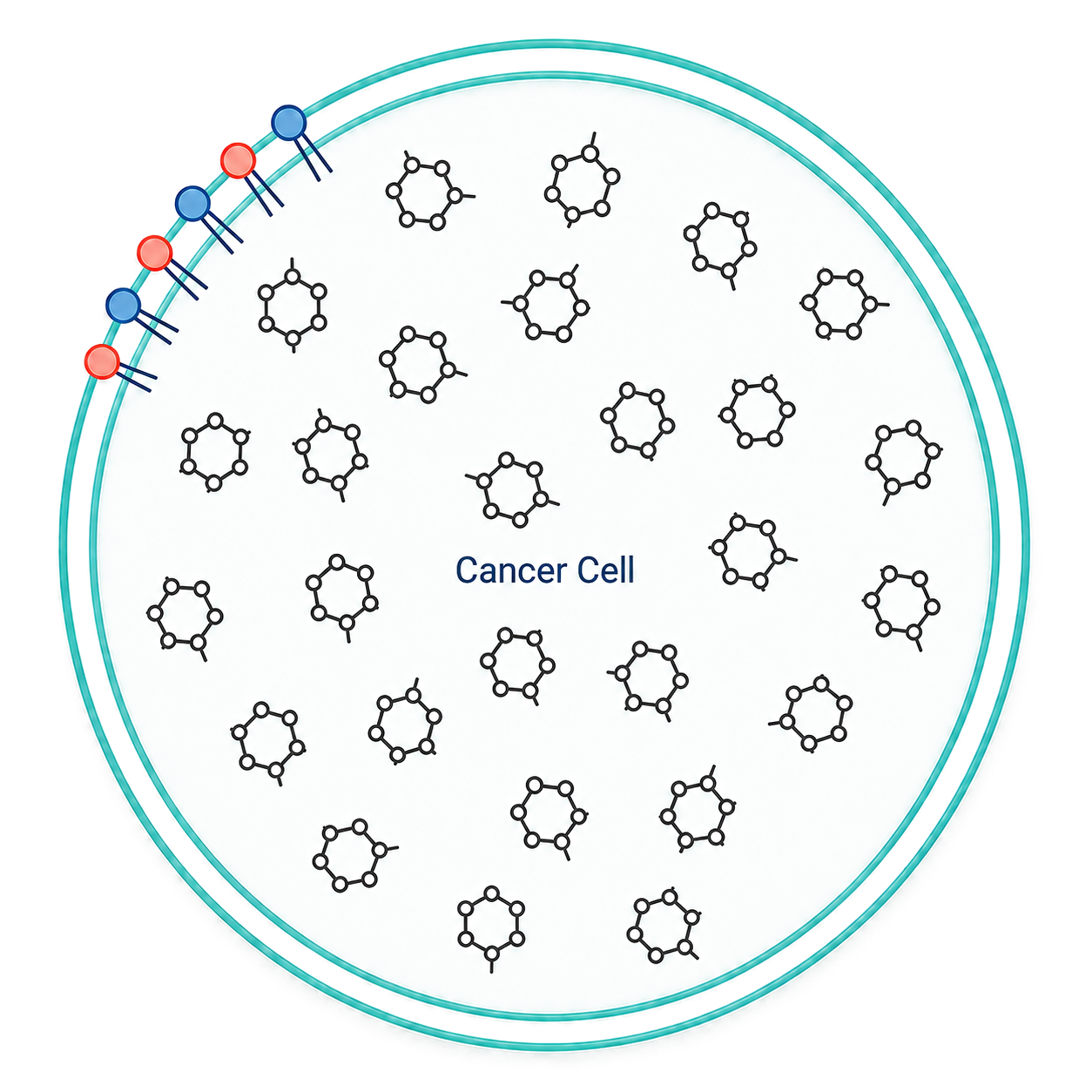
Phosphatidylserine (PS) flips to the outer leaflet of the cancer cell membrane. Unlike healthy cells, where PS stays hidden on the inner leaflet, cancer cells expose it universally, regardless of genetic profile.
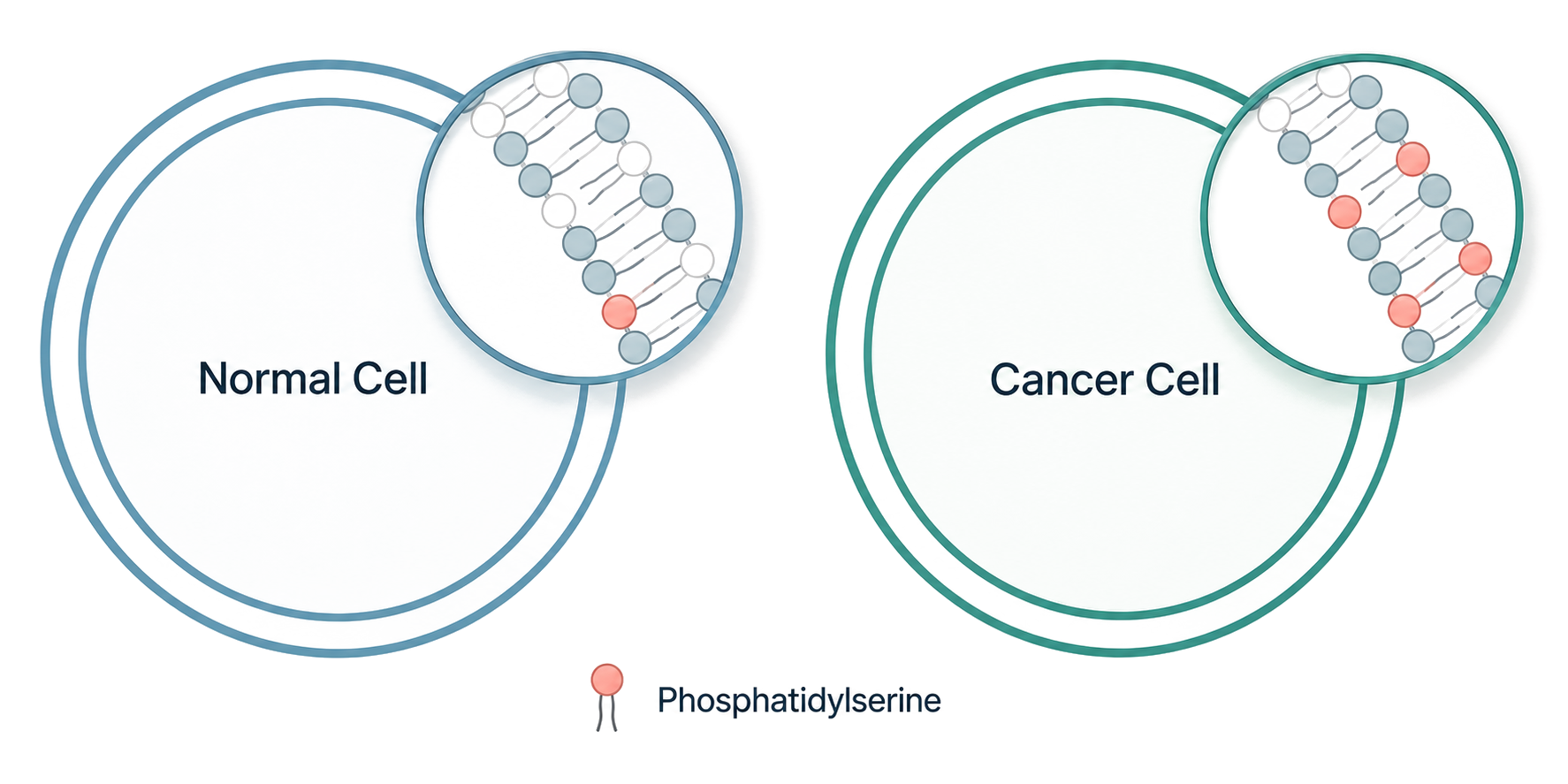
Normal cell vs cancer cell showing phosphatidylserine exposure on the outer membrane leaflet
02

NMPR-047 Structure

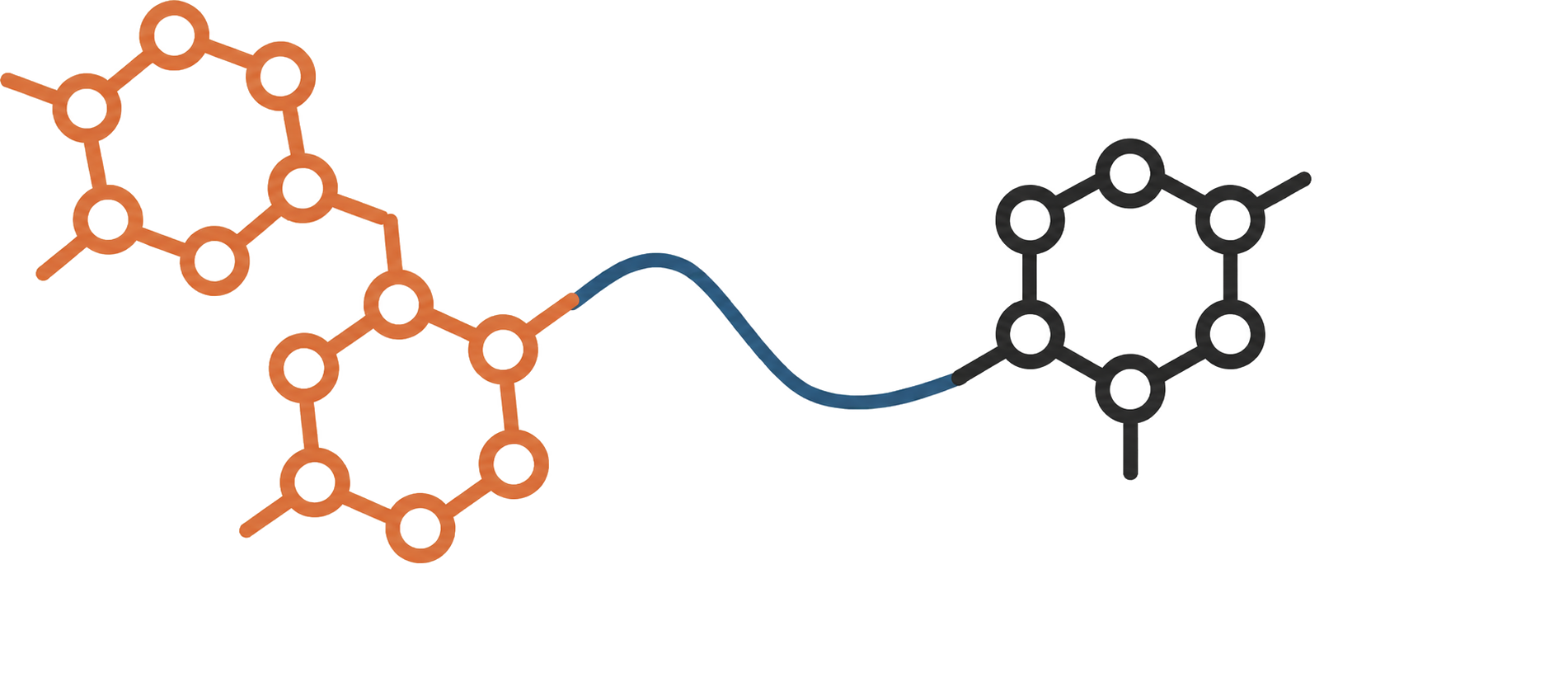
NMPR-047 is a synthetic drug conjugate with three components: a PS-selective binder (orange) that drives tumour accumulation, a proprietary pH-sensitive linker (blue) that releases the payload under acidic tumour conditions, and an SN-38 anti-cancer payload (green).

NMPR-047 molecule showing orange PS-selective binder, blue pH-sensitive linker, and green SN-38 payload
03

Tumour Accumulation & Payload Release

NMPR-047 binds externalised PS on the cancer cell surface and accumulates at the tumour. The acidic pH of the tumour microenvironment then reduces the stability of the linker bond, releasing the SN-38 payload on site.
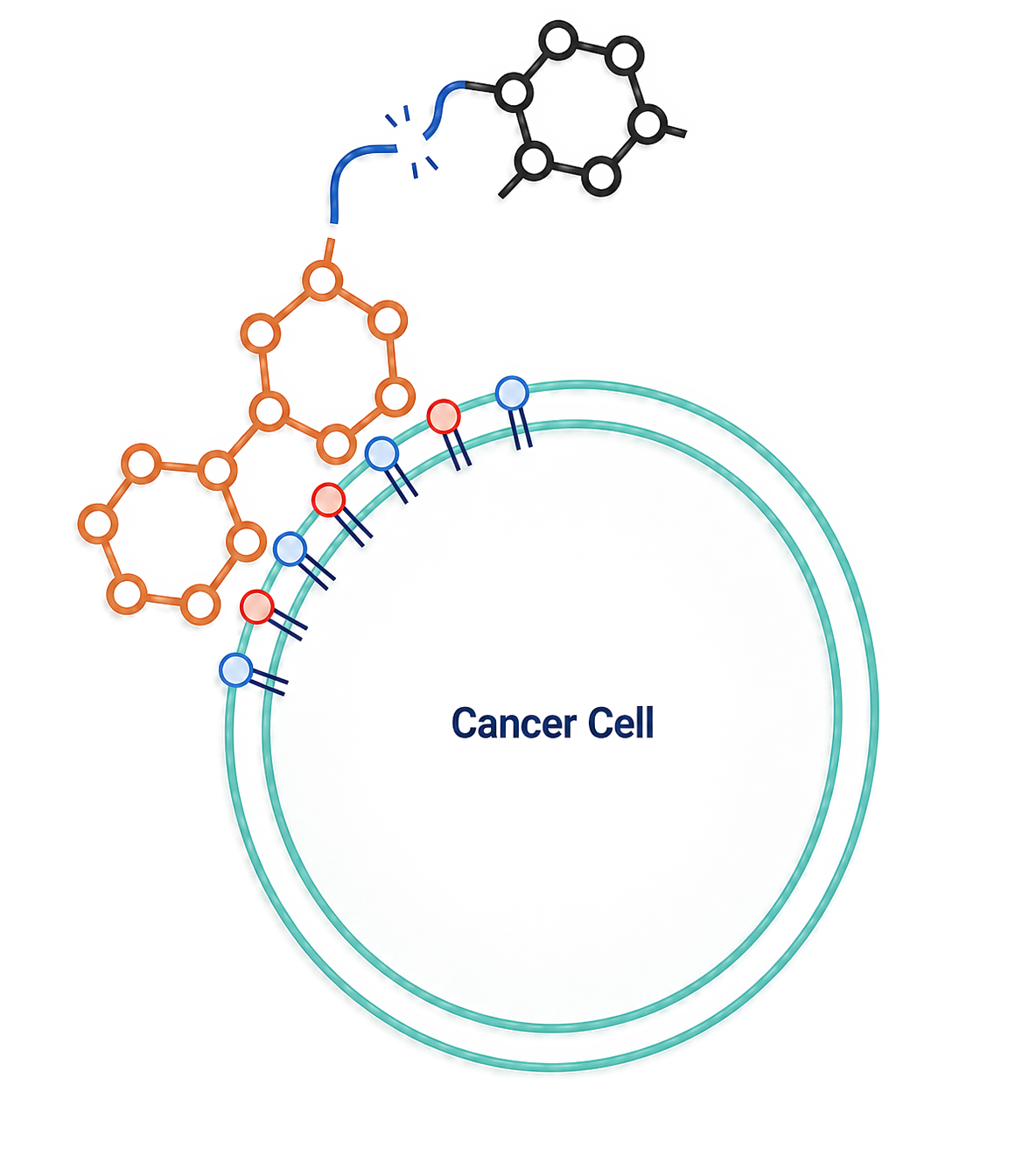
NMPR-047 binding to externalised phosphatidylserine on the cancer cell membrane and accumulating at the tumour site
04

Selective Cell Death

Released SN-38 inhibits topoisomerase I, inducing cell death at the tumour site. In preclinical models, NMPR-047 delivered superior tumour growth inhibition at a lower equivalent human dose than Irinotecan, with no treatment-related histopathological changes observed in normal tissues.
SN-38 payload selectively destroying cancer cell while healthy cell is spared
05

Dual-Gated Selectivity

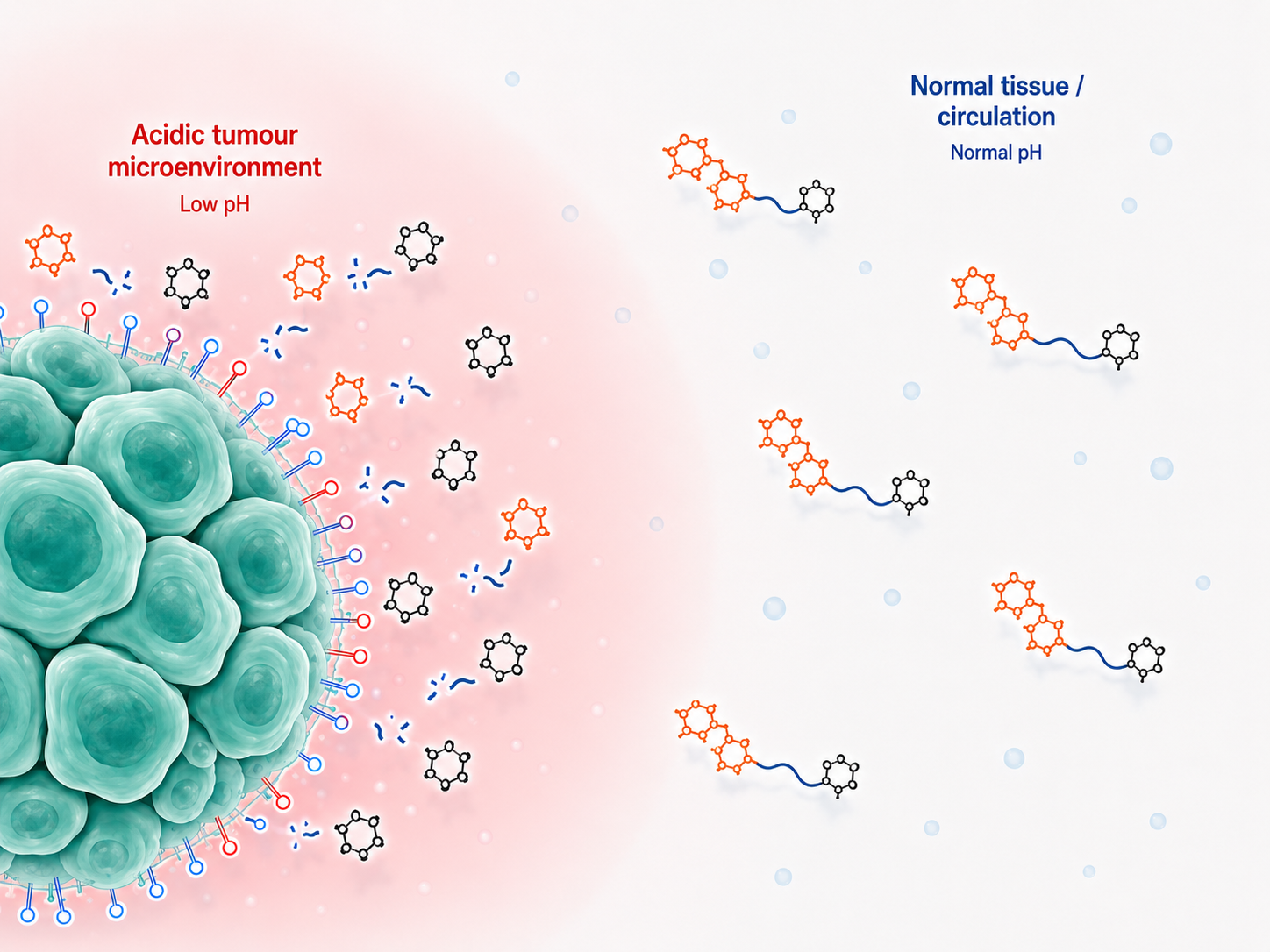
Selectivity depends on two sequential conditions: first, PS must be externalised for the molecule to bind and accumulate; second, the local pH must be sufficiently acidic to cleave the linker and release SN-38. In normal tissues where PS is not externalised and pH is physiological, the molecule is excreted intact before the payload is deployed.

Diagram showing NMPR-047 intact and excreted in normal tissue where PS is not externalised and pH is physiological, versus payload released in tumour tissue where both conditions are met

Risks? Addressed.

Technical risk
£900k of non-dilutive funding has already done the work. PDC-1 has demonstrated preclinical efficacy, a clean safety profile, and superiority over the standard of care before a single pound of investor capital is deployed.
Manufacturing risk
No cell lines. No fermentation. No cold chain. PDC-1 is chemically synthesised from commercial feedstocks via a short, convergent process. The chemistry is simple and scalable.
Regulatory risk
The payload has an established clinical record. The PS biomarker is already FDA-cleared for clinical trials. The trial design is simple and well validated. New Path is not asking regulators to accept anything novel.

The team

Deep expertise in synthetic chemistry, oncology, and translational science.

Loading...

News & announcements

Latest updates from New Path Molecular.

Loading...

Interested in learning more?

Review our pipeline and preclinical data, or contact the team directly.

Contact Us